
 Español
 Français
 Deutsch
 日本語
 한국어


silybin
Silybin is a naturally occurring flavonolignan best known as one of the principal active constituents of milk thistle seeds. It has attracted considerable scientific and medical interest because of its broad biological activity, especially in relation to liver health and antioxidant support. As a compound derived from a botanical source, silybin represents the bridge between traditional herbal use and modern pharmacological research.Chemically, silybin belongs to the flavonolignan family and is commonly discussed as part of a mixture of related molecules. It exists as two stereoisomers, often referred to as silybin A and silybin B. These structural forms contribute to its complex behavior in biological systems. Silybin is poorly soluble in water, which has influenced the development of different formulations aimed at improving absorption and bioavailability. Because of this limitation, various delivery approaches have been studied to enhance its effectiveness in the body.The most recognized property of silybin is its potential hepatoprotective effect. Research has shown that it may help protect liver cells from damage caused by toxins, alcohol, oxidative stress, and certain medications. It is thought to act through several mechanisms, including scavenging free radicals, reducing lipid peroxidation, stabilizing cell membranes, and supporting the regeneration of liver tissue. In addition, silybin may influence inflammatory pathways and help modulate immune responses, which further contributes to its protective profile.Another important feature of silybin is its antioxidant activity. Oxidative stress is a major factor in many chronic conditions, and silybin has been studied for its ability to neutralize reactive oxygen species and support the body’s natural defense systems. By reducing oxidative damage, it may help preserve cellular integrity and improve overall tissue resilience. This antioxidant capacity is one reason it has been explored beyond liver-related uses, including in areas such as skin health, metabolic support, and general wellness.Silybin has also been investigated for its potential anti-inflammatory and antifibrotic effects. Inflammation and fibrosis are common processes involved in the progression of many diseases, particularly those affecting the liver. Studies suggest that silybin may help regulate signaling pathways involved in inflammatory responses and collagen deposition. These findings have made it a subject of interest in research on chronic liver disorders, including fatty liver disease, hepatitis, and cirrhosis-related changes.From a practical perspective, silybin is often used in dietary supplements and health products aimed at supporting liver function. However, its clinical efficacy can depend on formulation, dosage, and individual health conditions. Because natural compounds can still interact with medications or affect metabolism, it is important to use them responsibly and with professional guidance when necessary.In summary, silybin is a well-studied plant-derived compound with significant antioxidant, anti-inflammatory, and liver-supporting properties. Its importance lies not only in traditional herbal medicine but also in its continuing role in modern scientific research.
Products
Category:
-
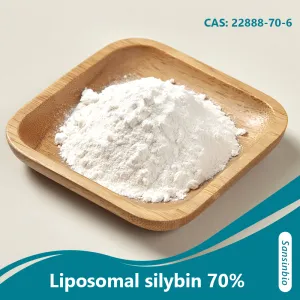
Liposomal Silybin 70% High Bioavailability Liver Support and Hepatoprotective Supplement
Category: Star productBrowse number: 124Number:Release time: 2026-10-20 19:11:17Liposomal Silybin 70% is a high-purity, liposomal-encapsulated form of silybin (silibinin)—the principal bioactive flavonolignan of silymarin, constituting 60–70% of the total silymarin complex extracted from Silybum marianum (milk thistle) seeds. Silybin exists as a 1:1 mixture of two diastereomers, silybin A and silybin B, and is considered the marker compound responsible for silymarin’s hepatoprotective, antioxidant, anti-inflammatory, and anti-fibrotic activities. However, native silybin suffers from extremely poor water solubility, with only 20–50% absorbed from the gut and an oral bioavailability of just 0.73%. Liposomal encapsulation within a phospholipid bilayer addresses these fundamental limitations. A lecithin-based phytosomal-liposomal formulation of silymarin achieved a 3.5-fold higher oral bioavailability compared to silymarin suspension, with 1.5-fold better hepatoprotection efficacy and 10-fold better prevention of ROS production in vitro. An optimized silybin liposome formulation using phosphatidylcholine and cholesterol achieved a sustained drug release of 80% within 20 hours, an optimized vesicle size of 276 nm, and 89% encapsulation efficiency, with superior hepatoprotective effects compared to silybin solution in animal studies. This water-dispersible powder is suitable for capsules, functional beverages, and nutritional formulations targeting liver support, hepatoprotection, and antioxidant defense. Each batch is HPLC-standardized and quality-tested for purity, identity, and silybin content.
News
Category:
No search results found!
Case
Category:
No search results found!
Video
Category:
No search results found!
Download
Category:
No search results found!
Job
Category:
No search results found!
Featured Products
-
NEWS
Liposomal Silybin 70% High Bioavailability Liver Support and Hepatoprotective Supplement
Learn more



 Phone