
 Español
 Français
 Deutsch
 日本語
 한국어


proanthocyanidins
Proanthocyanidins are a class of naturally occurring polyphenolic compounds found widely in plants, especially in grape seeds, berries, cocoa, apples, tea, pine bark, and many nuts and legumes. They are also known as condensed tannins because they are made up of flavan-3-ol units such as catechin and epicatechin linked together in chains or polymers. These compounds are responsible for many of the astringent and bitter characteristics in plant-based foods and beverages. In nature, they play an important protective role for plants by helping defend against pathogens, insects, UV radiation, and environmental stress.From a chemical perspective, proanthocyanidins are valued for their strong antioxidant properties. Their molecular structure allows them to neutralize free radicals and reduce oxidative stress in biological systems. Because of this, they have attracted significant interest in nutrition, food science, and health research. They can contribute to the stability of cells and tissues by helping protect lipids, proteins, and DNA from oxidative damage. This antioxidant activity is one of the major reasons they are studied for potential use in dietary supplements and functional foods.Proanthocyanidins are also associated with many bioactive effects beyond antioxidant activity. Research has suggested that they may support cardiovascular health by helping maintain healthy blood vessel function and circulation. They may also contribute to the maintenance of normal inflammatory responses, support immune function, and promote skin health by protecting collagen and elastin from degradation. In addition, they have been investigated for their possible role in supporting urinary tract health and oral health due to their interaction with microbial activity and tissue surfaces.In the food industry, proanthocyanidins are important because they influence taste, color, and shelf life. They can help preserve food quality by slowing oxidation, especially in products that contain fats and oils. Their ability to bind proteins also affects texture and mouthfeel, which is particularly noticeable in tea, wine, and cocoa products. For this reason, controlling proanthocyanidin content is an important part of processing and product formulation.The extraction and analysis of proanthocyanidins are often complex because their structures vary widely in size and composition. Scientists use methods such as chromatography and spectroscopy to identify and measure them. Their diversity makes them a challenging but fascinating group of compounds for research.Overall, proanthocyanidins are important plant-derived compounds with potential benefits in nutrition, health, and food preservation. Their natural origin, antioxidant capacity, and broad biological activity make them a valuable subject of study in both science and industry.
Products
Category:
-
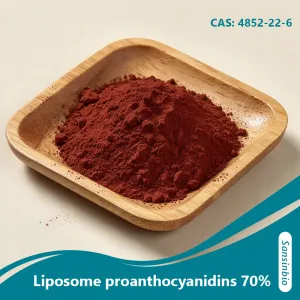
Liposomal Proanthocyanidins 70% High Bioavailability Oligomeric Proanthocyanidin Antioxidant Supplement
Category: OthersBrowse number: 71Number:Release time: 2026-10-20 20:07:00Premium Liposomal Proanthocyanidins 70% Cardiovascular and Cellular Defense Formula Product Summary Liposomal Proanthocyanidins 70% is a high-purity, liposomal-encapsulated form of proanthocyanidins (also known as oligomeric proanthocyanidins, OPCs, or condensed tannins)—a class of polyphenolic bioflavonoids found in grape seeds, pine bark, and various plant sources—standardized to ≥70% oligomeric proanthocyanidins by HPLC and ≥95% total proanthocyanidins by UV. Proanthocyanidins (CAS 4852-22-6) are chemically characterized by the molecular formula C₃₀H₂₆O₁₃ and a molecular weight of 594.52 g/mol. They are among the most potent natural free radical scavengers ever discovered, with antioxidant activity significantly exceeding that of vitamins C and E, and are widely recognized for their cardiovascular, anti-inflammatory, and cellular protective properties. However, native proanthocyanidins suffer from poor biostability and low bioavailability, which severely limit their therapeutic applications. Liposomal encapsulation within a phospholipid bilayer addresses these fundamental limitations. Ultrasonic-assisted nanoencapsulation of proanthocyanidins in liposomes achieved an encapsulation efficiency of 73.84% and increased bioaccessibility during in vitro digestion by 2.28–3.07-fold, with in vivo analyses showing over 200% increase in bioaccessibility compared to the control. A separate study on chitosan-coated liposomal nanocarriers for grape seed proanthocyanidins achieved encapsulation efficiencies exceeding 90% with particle sizes of 120–150 nm. This water-dispersible powder is suitable for capsules, functional beverages, and nutritional formulations targeting antioxidant defense, cardiovascular health, and cellular longevity. Each batch is HPLC-standardized and quality-tested for purity, identity, and proanthocyanidin content.
News
Category:
No search results found!
Case
Category:
No search results found!
Video
Category:
No search results found!
Download
Category:
No search results found!
Job
Category:
No search results found!
Featured Products
No search results found!



 Phone