
 Español
 Français
 Deutsch
 日本語
 한국어


Lipid-encapsulated apigenin
Lipid-encapsulated apigenin is a formulated form of the natural flavonoid apigenin, in which the compound is incorporated into a lipid-based delivery system to improve its practical performance. Apigenin is widely found in plants such as parsley, chamomile, celery, and various fruits and vegetables. It has attracted significant attention in research because of its antioxidant, anti-inflammatory, and potential health-supporting properties. However, like many plant-derived flavonoids, apigenin has limitations related to poor water solubility, low stability, and restricted bioavailability. Lipid encapsulation is designed to address these challenges by protecting apigenin and helping it move more effectively through the body.In a lipid-encapsulated system, apigenin is surrounded or embedded within lipid materials such as phospholipids, oils, or other lipid matrices. This structure can help shield the active compound from degradation caused by light, oxygen, heat, or unfavorable conditions in the digestive tract. It may also improve dispersibility in aqueous environments, which is especially important for absorption after oral administration. By enhancing solubility and stability, lipid encapsulation can support more consistent delivery of apigenin to target tissues.One of the main advantages of lipid-encapsulated apigenin is improved bioavailability. Free apigenin often experiences limited absorption because it does not dissolve easily in water and may be rapidly metabolized. Encapsulation within lipids can promote better uptake through biological membranes and may extend the residence time of the compound in the bloodstream. This can potentially allow lower doses to achieve more effective delivery, although the exact outcome depends on the formulation design and intended use.Lipid-based delivery systems can also offer controlled release properties. Instead of releasing all of the apigenin at once, the lipid matrix may allow gradual release over time. This can help maintain more stable levels of the compound and may reduce the need for frequent dosing. Depending on the formulation, lipid-encapsulated apigenin can be developed in various forms, such as liposomes, solid lipid nanoparticles, nanoemulsions, or other colloidal systems.Research interest in lipid-encapsulated apigenin is growing across nutritional, cosmetic, and pharmaceutical fields. In dietary applications, it may be used to support antioxidant intake in functional foods or supplements. In topical products, the lipid structure may improve skin compatibility and help deliver apigenin to the skin barrier more efficiently. In biomedical research, it is being explored for its possible role in inflammation modulation, cellular protection, and other areas of health science.Overall, lipid-encapsulated apigenin represents an important advancement in the delivery of a promising natural flavonoid. By improving solubility, stability, absorption, and release behavior, lipid encapsulation helps overcome the weaknesses of free apigenin and expands its potential applications in health-related products and research.
Products
Category:
-
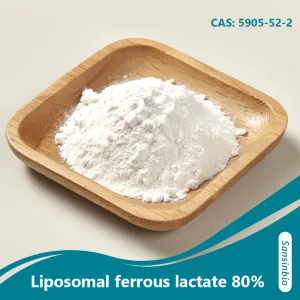
Premium Liposomal Ferrous Lactate 80% Hemoglobin Formation and Oxygen Transport Formula
Category: Liposomal Iron SaltBrowse number: 150Number:Release time: 2026-10-20 20:08:23Liposomal Ferrous Lactate 80% is a high-purity, liposomal-encapsulated form of ferrous lactate—a well-tolerated organic iron(II) salt of lactic acid—standardized to ≥80% active content. Ferrous lactate contains approximately 19% elemental iron, one of the highest iron contents among organic ferrous salts, and is recognized for its superior bioavailability, excellent water solubility, and reduced gastrointestinal irritation compared to inorganic iron salts such as ferrous sulfate. The lactate anion provides greater stability to iron by preventing its decomposition inside the intestinal tube and is virtually unaffected by high humidity. However, conventional ferrous lactate is easily oxidized in light, heat, and air, and iron absorption is subject to tight homeostatic regulation. Liposomal encapsulation within a phospholipid bilayer protects the ferrous iron from oxidation, shields the iron-lactate complex from premature interaction with dietary inhibitors, and facilitates efficient cellular delivery via lipid-mediated pathways. Multiple studies have demonstrated that liposomal iron achieves bioavailability comparable to or exceeding that of ferrous sulfate despite containing lower elemental iron doses, with enhanced palatability and reduced gastrointestinal side effects. This water-dispersible powder is suitable for capsules, functional beverages, and food fortification targeting iron deficiency anemia, hemoglobin formation, and energy metabolism. Each batch is HPLC-standardized and quality-tested for purity, identity, and elemental iron content.
News
Category:
No search results found!
Case
Category:
No search results found!
Video
Category:
No search results found!
Download
Category:
No search results found!
Job
Category:
No search results found!
Featured Products
No search results found!



 Phone